BASIC TERMS OF GARDENING:
ANNUALS: Perfect for planters, containers or filling empty spots in flower beds, annuals need to be planted every year as they only last a single cycle.
PERENNIALS: A plant that lives for more than two years. Perennials die back to their crown every fall/winter and then grow back the next season.
NATIVE PLANTS: Native plants are hardy as they exist naturally in our climate and area.
BEDDING PLANTS: Mainly annuals and nursery grown, do best in flower beds.
FULL SUN: At least 6 hours of sunlight per day.
PART SUN or PART SHADE: At least 3 hours of direct sun, preferably morning or early afternoon.
FULL SHADE: Less than 3 hours of direct sunlight with filtered light the rest of the time.
HARDINESS ZONE: For our area, you should be looking for Zone 2 and 3. The zone is based on the minimum temperature at which the plant can survive.
BULB: Thickened underground storage organ of the group of perennials which includes daffodils and tulips.
COMPOST: Mixture of decaying, organic material used for soil amending, fertilizing and mulching.
DEADHEADING: Removal of spent blooms for grooming and preventing the bloom going to seed. This step promotes continued blooming.
Different plants require different pruning, watering and amounts of exposure to sun. An easy way to keep track is to keep the instruction tag that comes with the plant, or you can visit this site with detailed information: http://www1.agric.gov.ab.ca/$department/deptdocs.nsf/all/agdex75
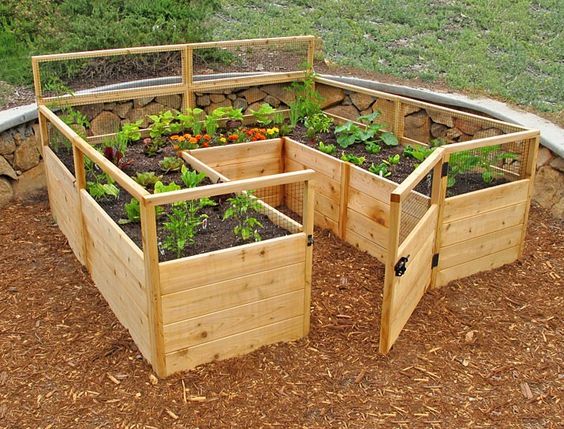
Raised Gardens for flowers and vegetables have really exploded in popularity. Catering to a size that suits your needs, they are a lot more manageable and can be very aesthetically pleasing, such as gardens like this one:
The first weekend in May is generally an excellent time to plant your vegetables. For plants such as pumpkins, geraniums, cucumbers, peppers and basil you will need to wait until the first week of June when the threat of frost is gone, but no later than June 10th or you risk maturing in the frosts of September! In our area, the “frost free” date runs around May 27th. If frost is in the forecast, simply cover the plants with a sheet for protection. Pots can be moved indoors.
DID YOU KNOW??? When planting, vegetables like to disagree as much as feuding neighbors? Here is a handy “Companion Planting Chart” for planning out your garden: http://www.vegetablegardeninglife.com/companion-planting-charts.html
GET BUZZING:
Bees. We seem to be hearing the talk more and more about the importance of protecting and supporting the bees, and rightfully so. Without them, we’d cease to exist, and our society is finally understanding just how depleted they are becoming. Did you know that ¾ of the food we eat requires pollinators, and by having bees around you will TRIPLE your yield of garden fruit and veggies! Residents are being encouraged to help out in a number of ways.
- As dandelions are one of the first spring foods for the bees, people are being asked not to spray pesticides.
- Residents are encouraged to plant a bee friendly garden, including wildflowers. Many greenhouses now carry kits with plants and flowers that attract bees. Native plants attract native bees and exotic plants attract exotic bees.
- Build Your Own Bee House or a Bee Bath
- Bees love color, especially blue, white, violet, yellow and purple. Plant flowers in groups that are 4 feet in diameter so the bees are more likely to find them.
** For more detailed information, you can visit: http://www.davidsuzuki.org/what-you-can-do/food-and-our-planet/create-a-bee-friendly-garden/
Have a fantastic month of May!
The Brent MacIntosh Real Estate Team

No comments:
Post a Comment