From yellowing leaves to cooler temps, September has arrived! Many of us can feel overwhelmed this time of year. Calendars shift from the relaxed pace of summer to the hectic fullness of balancing sports, homework, jobs, family...and somewhere in between, we actually need to eat balanced meals.
Thanks to the magical mix of the slow cooker and sites such as Pinterest, getting meals on the table when you have a brief time in between scheduled events can be easier than you think. To help you kickstart fall, here are a few 'sure to please' recipes to add to your repertoire:
MAC & CHEESE:
INGREDIENTS:
1 lb. elbow macaroni
1/2 c. butter, melted
4 c. shredded Cheddar cheese
4 oz. cream cheese
1/2 c. finely grated Parmesan
24 oz. evaporated milk
2 c. whole milk
1/2 tsp. garlic powder
1/8 tsp. paprika
kosher salt
Freshly ground black pepper
DIRECTIONS: In the bowl of the slow cooker, combine macaroni, butter, cheddar cheese, cream cheese, finely grated Parmesan, evaporated milk, whole milk, garlic powder and paprika. Season with salt and pepper.
Cook on high until the pasta is cooked through and the sauce has thickened, about 2-3 hours. Check after 2 hours, then every 20 minutes after.
SHORT RIB STEW:
INGREDIENTS:
4 1/2 lb. bone-in short ribs (about 3 large short ribs)
kosher salt
1/2 c. all-purpose flour
2 tbsp. butter
1 onion, chopped
4 cloves garlic, minced
2 bay leaves
1 tsp. freshly chopped thyme
3 carrots, chopped
3 celery stalks, chopped
2 c. chopped potatoes (Yukon Gold or new potatoes)
1 tsp. Worcestershire sauce
3 tbsp. tomato paste
2 c. beef broth
2 c. red wine
1
28-oz. can crushed tomatoes
2 c. wild rice
DIRECTIONS: In a large mixing bowl, pat short ribs dry with a paper towel. Salt generously and dredge in flour until evenly coated.
In a large Dutch oven over medium-high heat, melt butter. Dust off excess flour and sear meat on all sides until golden brown with a crust, about 10 minutes.
Remove meat and add to slow cooker. Stir in all remaining ingredients except rice; season with salt and cook on low, 8 hours. Meat should be tender and fall off the bone. Skim off top layer of fat and remove bay leaves.
Meanwhile, cook wild rice according to package directions. Serve stew over wild rice.
HONEY GARLIC CHICKEN & VEGGIES:
INGREDIENTS:
8 bone-in, skin-on chicken thighs
16 ounces baby red potatoes, halved
16 ounces baby carrots
16 ounces green beans, trimmed
2 tablespoons chopped fresh parsley leaves
FOR THE SAUCE:
1/2 cup reduced sodium soy sauce
1/2 cup honey
1/4 cup ketchup
2 cloves garlic, minced
1 teaspoon dried basil
1/2 teaspoon dried oregano
1/4 teaspoon crushed red pepper flakes
1/4 teaspoon ground black pepper
DIRECTIONS:
In a large bowl, combine soy sauce, honey, ketchup, garlic, basil, oregano, red pepper flakes and pepper.
Place chicken thighs, potatoes, carrots and soy sauce mixture into a 6-qt slow cooker. Cover and cook on low heat for 7-8 hours or high for 3-4 hours, basting every hour. Add green beans during the last 30 minutes of cooking time.
OPTIONAL: Preheat oven to broil. Place chicken thighs onto a baking sheet, skin side up, and broil until crisp, about 3-4 minutes.
PULLED PORK WITH CARMELIZED ONIONS:
INGREDIENTS:
1 tablespoon extra-virgin olive oil
3 large onions, thinly sliced
⅓ cup raw cane sugar, such as Demerara or turbinado
4 cloves garlic, minced
1 teaspoon dried oregano
1 teaspoon freshly ground pepper
½ teaspoon salt
⅓ cup cider vinegar
1 cup chili sauce, such as Heinz
1½-3 teaspoons minced chipotle chile in adobo sauce
3 pounds boneless pork shoulder or blade (butt) roast, trimmed
DIRECTIONS:
Heat oil in a large skillet over medium-high heat. Add onions and cook, stirring occasionally, until they begin to soften, 3 to 6 minutes. Add sugar and continue to cook, stirring constantly, until the onions are golden brown, 6 to 8 minutes more. Add garlic, oregano, pepper and salt and cook, stirring, for 1 minute. Add vinegar and bring to a boil. Cook until mostly evaporated, 30 seconds to 1 minute. Remove from the heat and stir in chili sauce and chipotle to taste.
Place pork in a 4-quart (or larger) slow cooker and cover with the sauce. Cover and cook until the pork is almost falling apart, about 4 hours on High or 8 hours on Low.
Transfer the pork to a cutting board and shred using two forks. Stir back into the sauce.
Make Ahead Tip: Prepare through Step 1, cover and refrigerate for up to 2 days. To finish, bring the sauce to a simmer and continue with Steps 2; 3. The cooked pork can be refrigerated for up to 3 days.
SPAGHETTI & MEATBALLS:
INGREDIENTS:
Meatballs
2 large eggs
½ cup dry whole-wheat breadcrumbs
½ cup finely chopped onion
½ cup grated Parmigiano-Reggiano cheese, plus more for serving
¼ cup minced fresh parsley
3 cloves garlic, minced
1 teaspoon salt
½ teaspoon freshly ground pepper
8 ounces lean (90% or leaner) ground beef
8 ounces ground pork or Italian pork sausage
8 ounces ground veal
Sauce:
1 tablespoon extra-virgin olive oil
1 cup finely chopped onion
3 cloves garlic, finely chopped
2 teaspoons Italian seasoning
¼ teaspoon crushed red pepper
1 cup dry red wine
1 28-ounce can crushed tomatoes
1 14-ounce can diced tomatoes
1 pound whole-wheat spaghetti
1 tablespoon finely chopped fresh oregano
To prepare meatballs: Lightly beat eggs in a large bowl. Stir in breadcrumbs, ½ cup onion, cheese, parsley, garlic, salt and pepper. Add beef, pork (or sausage) and veal; gently mix until combined (do not overmix). Using ¼ cup for each, make 16 meatballs and place in a 6-quart slow cooker.
To prepare sauce & spaghetti: Heat oil in a large skillet over medium heat. Add 1 cup onion and cook, stirring occasionally, until beginning to brown, 3 to 5 minutes. Add garlic, Italian seasoning and crushed red pepper; cook, stirring, for 30 seconds. Add wine and boil for 1 minute. Add crushed and diced tomatoes and bring to a simmer. Pour the sauce over the meatballs.
Put the lid on the slow cooker and cook on High for 4 hours or Low for 8 hours.
30 minutes before you're ready to eat, bring a large pot of water to a boil. Cook the spaghetti until just tender, 8 to 10 minutes or according to package directions.
Spoon any fat off the sauce; add oregano. Serve the meatballs and sauce over the spaghetti with extra Parmesan, if desired.
Make Ahead Tip: To prep ahead: Make meatballs and sauce (Steps 1 & 2); cover and refrigerate separately for up to 1 day. Reheat sauce to a simmer before adding to slow cooker. To make ahead: Freeze cooked meatballs in sauce airtight for up to 3 months. Defrost before reheating.
We hope that settling into September has been a smooth transition for you. Maybe you've decided it is also the time to make some big changes, such as buying or selling your home. Our team of professionals combine experience with elevated customer care, allowing us to provide our clients with the highest standards of service. We take pride in our comprehensive knowledge of the market, and are pleased to offer you a complimentary home evaluation to let you know exactly where you stand. In a market that has been unpredictable, combined with a difficult economy, our team is here to help you every step of the way. If you are thinking of buying or selling your home, or if you know someone who is, we never take your referrals for granted. We always appreciate your business.
Sincerely,
The Brent MacIntosh Real Estate Team
The Brent MacIntosh Real Estate Group
Wednesday, September 13, 2017
Tuesday, July 11, 2017
July 2017 - Happy Canada 150!
| |||
| |||
| |||
| |||
| |||
| |||
| |||
|
Friday, November 11, 2016
November Newsletter - Remembrance Day and November Events
| |||
| |||
|
Friday, October 7, 2016
October 2016 - Giving Thanks and the Latest Market News
| |||
| |||
| |||
| |||
| |||
| |||
| |||
| |||
| |||
| |||
| |||
|
Tuesday, July 12, 2016
July Newsletter - Campgrounds in Alberta
Summer has officially arrived! Lunch boxes are stowed, spelling and
math tests have been recycled, the bells have rang out another year and
the graduating class of 2016 is enjoying those last months before
official adulthood status kicks in. So what are Alberta residents up to
for the summer? Well if you take a drive down any highway connected to
our great city, you will quickly notice the abundance of campers,
trailers and backcountry toys. Making smores, roasting hotdogs and
chatting around a campfire is something many of us have spent time
enjoying. Whether you are cozied up in a tent at the top of the
rockies, enjoying coffee on the porch of the family cabin or set up at
the lake in a full sized trailer, camping is such a great way for
families to spend time together. We tend to have our favorite spots,
but if you are looking for something new, why not try one of these?
Top Campgrounds in Alberta:
Have a fantastic July!
The Brent MacIntosh Real Estate Team
Top Campgrounds in Alberta:
- Peter Lougheed Provincial Park: ‘Point Campground’ located in Alberta’s Kananaskis Country sits on the west shore of Upper Kananaskis Lake and is rated no. 5 in a list of “Canada’s 25 Best Campgrounds”. Families can fish for trout, hike for the views and meadows found at South Kananaskis Pass, challenge themselves with a trek to Fossil Falls or canoe and kayak on the lake.
- Columbia Icefields Campground: This tent only site at 2000 meters elevation is one of the highest in Canada, and can be found along the famous Icefields Parkway. If you love hiking and glaciers, this is the spot for you.
- Townsite Campground, Waterton: This scenic campground is popular for it’s stunning lake and mountain views. You can check out the iconic Prince of Wales Hotel, take a boat ride, pass by waterfalls and do plenty of hiking. The bonus is that you are right in town with walking access to everything!
- Writing-On-Stone Provincial Park: ‘Main Campground’ is enveloped in the historical importance of the Blackfoot people. With grasslands, sandstone cliffs, badlands and hoodoos, this campground sits close to a beach along the Milk River. With a Blackfoot interpreter, families can also partake in the “Rock Art Tour” a restricted area that is home to pictographs and petroglyphs.
- Cypress Hills Interprovincial Park: Located south-east of Medicine Hat, this is Canada’s only interprovincial park, which straddles the Alberta and Saskatchewan border. Elkwater Campground is popular on the Alberta side. With every lake activity one can imagine from fishing and kayaking to boating and seadoos, visitors can truly enjoy a fresh water lake experience. Families can hike, bike and even zipline!
- Dinosaur Provincial Park, Drumheller: We all know that this is the land of badlands, hoodoos….and dinos, including the world’s largest Dinosaur and the incredible Royal Tyrell Museum. Camping here is something that is extremely popular among Alberta families with it’s abundance of activities and unique terrain.
- Tunnel Mountain, Banff: There is no shortage of scenery, hiking and activity from this popular campground. Being located on the edge of the townsite means families have easy access to everything they need, and strolling main street Banff is a favorite tourist pastime.
- Lesser Slave Lake: If lazy days on the beach, or any water activity from kayaking and paddleboarding to waterskiing and fishing are on your agenda, then Alberta’s largest lake has it all. With campgrounds just outside of town dotting the lakeshore, you have easy access to the town’s amenities.
Have a fantastic July!
The Brent MacIntosh Real Estate Team
Monday, May 2, 2016
Gardens and Buzzing Bees...It's May in Alberta!
If the early summer temperatures and smell of bbq didn’t already tell
you that summer is on its way, then the lineups at every greenhouse
should. Gardening seems to come with plenty of advice, dates, names,
zones and genius Pinterest ideas. Certain plants want shade, others
thrive in sun. Some need pruning while others hate to be touched. And
heaven forbid you put the potatoes and turnips together, they are
enemies after all. While there is a lot to gardening, it can be
extremely rewarding. Please feel free to share your stunning garden
photos by tagging us on social media!
BASIC TERMS OF GARDENING:
ANNUALS: Perfect for planters, containers or filling empty spots in flower beds, annuals need to be planted every year as they only last a single cycle.
PERENNIALS: A plant that lives for more than two years. Perennials die back to their crown every fall/winter and then grow back the next season.
NATIVE PLANTS: Native plants are hardy as they exist naturally in our climate and area.
BEDDING PLANTS: Mainly annuals and nursery grown, do best in flower beds.
FULL SUN: At least 6 hours of sunlight per day.
PART SUN or PART SHADE: At least 3 hours of direct sun, preferably morning or early afternoon.
FULL SHADE: Less than 3 hours of direct sunlight with filtered light the rest of the time.
HARDINESS ZONE: For our area, you should be looking for Zone 2 and 3. The zone is based on the minimum temperature at which the plant can survive.
BULB: Thickened underground storage organ of the group of perennials which includes daffodils and tulips.
COMPOST: Mixture of decaying, organic material used for soil amending, fertilizing and mulching.
DEADHEADING: Removal of spent blooms for grooming and preventing the bloom going to seed. This step promotes continued blooming.
Different plants require different pruning, watering and amounts of exposure to sun. An easy way to keep track is to keep the instruction tag that comes with the plant, or you can visit this site with detailed information: http://www1.agric.gov.ab.ca/$department/deptdocs.nsf/all/agdex75
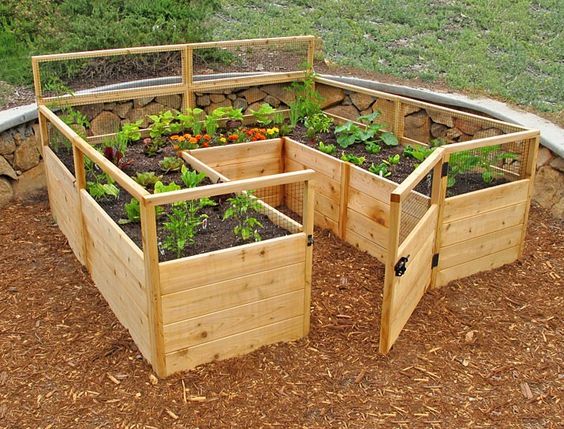
Raised Gardens for flowers and vegetables have really exploded in popularity. Catering to a size that suits your needs, they are a lot more manageable and can be very aesthetically pleasing, such as gardens like this one:

The first weekend in May is generally an excellent time to plant your vegetables. For plants such as pumpkins, geraniums, cucumbers, peppers and basil you will need to wait until the first week of June when the threat of frost is gone, but no later than June 10th or you risk maturing in the frosts of September! In our area, the “frost free” date runs around May 27th. If frost is in the forecast, simply cover the plants with a sheet for protection. Pots can be moved indoors.
DID YOU KNOW??? When planting, vegetables like to disagree as much as feuding neighbors? Here is a handy “Companion Planting Chart” for planning out your garden: http://www.vegetablegardeninglife.com/companion-planting-charts.html
GET BUZZING:
Bees. We seem to be hearing the talk more and more about the importance of protecting and supporting the bees, and rightfully so. Without them, we’d cease to exist, and our society is finally understanding just how depleted they are becoming. Did you know that ¾ of the food we eat requires pollinators, and by having bees around you will TRIPLE your yield of garden fruit and veggies! Residents are being encouraged to help out in a number of ways.
The rise in temperatures has also brought a rise in listings hitting
the market, the highest it has been in 6 years. This is a fantastic
time if you are a buyer looking to get into that first home or if you
are looking for an investment property. If you are looking to sell,
this means it is more important than ever to invest in an experienced
real estate agent to help. Our team is here to answer any questions or
concerns you may have, and to help lead you every step of the way. As
always, we never take your referrals for granted.
Have a fantastic month of May!
The Brent MacIntosh Real Estate Team
BASIC TERMS OF GARDENING:
ANNUALS: Perfect for planters, containers or filling empty spots in flower beds, annuals need to be planted every year as they only last a single cycle.
PERENNIALS: A plant that lives for more than two years. Perennials die back to their crown every fall/winter and then grow back the next season.
NATIVE PLANTS: Native plants are hardy as they exist naturally in our climate and area.
BEDDING PLANTS: Mainly annuals and nursery grown, do best in flower beds.
FULL SUN: At least 6 hours of sunlight per day.
PART SUN or PART SHADE: At least 3 hours of direct sun, preferably morning or early afternoon.
FULL SHADE: Less than 3 hours of direct sunlight with filtered light the rest of the time.
HARDINESS ZONE: For our area, you should be looking for Zone 2 and 3. The zone is based on the minimum temperature at which the plant can survive.
BULB: Thickened underground storage organ of the group of perennials which includes daffodils and tulips.
COMPOST: Mixture of decaying, organic material used for soil amending, fertilizing and mulching.
DEADHEADING: Removal of spent blooms for grooming and preventing the bloom going to seed. This step promotes continued blooming.
Different plants require different pruning, watering and amounts of exposure to sun. An easy way to keep track is to keep the instruction tag that comes with the plant, or you can visit this site with detailed information: http://www1.agric.gov.ab.ca/$department/deptdocs.nsf/all/agdex75
Raised Gardens for flowers and vegetables have really exploded in popularity. Catering to a size that suits your needs, they are a lot more manageable and can be very aesthetically pleasing, such as gardens like this one:

The first weekend in May is generally an excellent time to plant your vegetables. For plants such as pumpkins, geraniums, cucumbers, peppers and basil you will need to wait until the first week of June when the threat of frost is gone, but no later than June 10th or you risk maturing in the frosts of September! In our area, the “frost free” date runs around May 27th. If frost is in the forecast, simply cover the plants with a sheet for protection. Pots can be moved indoors.
DID YOU KNOW??? When planting, vegetables like to disagree as much as feuding neighbors? Here is a handy “Companion Planting Chart” for planning out your garden: http://www.vegetablegardeninglife.com/companion-planting-charts.html
GET BUZZING:
Bees. We seem to be hearing the talk more and more about the importance of protecting and supporting the bees, and rightfully so. Without them, we’d cease to exist, and our society is finally understanding just how depleted they are becoming. Did you know that ¾ of the food we eat requires pollinators, and by having bees around you will TRIPLE your yield of garden fruit and veggies! Residents are being encouraged to help out in a number of ways.
- As dandelions are one of the first spring foods for the bees, people are being asked not to spray pesticides.
- Residents are encouraged to plant a bee friendly garden, including wildflowers. Many greenhouses now carry kits with plants and flowers that attract bees. Native plants attract native bees and exotic plants attract exotic bees.
- Build Your Own Bee House or a Bee Bath
- Bees love color, especially blue, white, violet, yellow and purple. Plant flowers in groups that are 4 feet in diameter so the bees are more likely to find them.
** For more detailed information, you can visit: http://www.davidsuzuki.org/what-you-can-do/food-and-our-planet/create-a-bee-friendly-garden/
Have a fantastic month of May!
The Brent MacIntosh Real Estate Team
Sunday, April 24, 2016
Edmonton and Area Off Leash Parks
Here at the BMREG we are all dog owners, proud mama’s and
papa’s of our four legged family members.
Now that the weather is nice, it is the perfect opportunity to get out
and enjoy the dog parks created with our dogs specifically in mind! Keep in mind, they all tend to follow the
same general rules:
Dogs must be licensed, obey commands and you must still have a
leash handy. “Restricted” dogs are not
allowed in dog parks in Edmonton,
and you must also pick up after your dog, so bring your bag! You can visit local websites for more
specific info.
Dog owners need to remember that dogs are not permitted in
the following areas:
- Playgrounds (sand or grass beneath the equipment)
- Tennis Courts
- Spray Decks
- Floral Gardens
- Strathcona Wilderness Centre
- Artificial Turf Sport Fields
OFF LEASH AREAS:
EDMONTON:
Did you know Edmonton
has over 40 sites where a dog can run off leash?
**A much loved favourite among our clients is the Terwillegar Off Leash
Site!
- For a complete interactive map of Edmonton Off Leash Sites, visit here: http://www.edmonton.ca/activities_parks_recreation/parks_rivervalley/off-leash-locations.aspx
STRATHCONA COUNTY:
Again, dogs must be licensed, you must clean up after your
dog, and the person holding the leash must be able to control the dog. Leashes must be no longer than eight meters,
and “restricted or vicious” dogs are subject to great restrictions.
- The Deermound Dog Off Leash Site. For more info, visit: http://www.strathcona.ca/departments/recreation-parks-and-culture/parks-trails-sports-venues/dogs-in-the-park/
FORT SASKATCHEWAN:
- Covering over 6 acres! http://www.fortsask.ca/residents/parks-trails/off-leash-dog-park
ST
ALBERT:
- St Alberta has 2 dog parks as well now including 12 outdoor skating rinks (when not in use for organized sports): https://stalbert.ca/getting-around/maps/dog-friendly-parks/
The warmth of the spring season has seen many new listings
popping up! We take pride in our
comprehensive knowledge gained through years of experience, and we continually
strive to provide our clients with the most up to date market information. We stay up to date on the latest market
trends and marketing tools to help you buy or sell a home efficiently and
effectively. We never take referrals for
granted, and appreciate each and every one.
If you or someone you know is looking to buy or sell in 2016, we would
be more than happy to provide a complimentary assessment or answer any
questions you may have. It’s what we do.
Sincerely,
The Brent MacIntosh Real Estate Group
Meet Gizmo:
This handsome man belonging to Brent and Sabrina just
celebrated his 11th birthday!
Subscribe to:
Posts (Atom)